| |
Russian Revolution's Forum
E-books World history, Rus' history and Religions history
Modernization of Russia
Holy Russia - Third Rome
The new subject of international law, the State Holy Russia - Third Rome, 21.09.2013. | Nova Church of Holy Russia
Orthodoxy and Christianity require reforming and release of heresy and obscurantism. 21.09.2011. | Ethnopolitical transformation of Russia New!!!
The author investigates the deep ethnic and political processes occurring within Russian society. Russian statehood and the people are at a historical crossroads. The path chosen by the authorities leads to a dead end of a renewed Kyrgyz Khaganate. The alternative will allow the Russian people to achieve a European renaissance and rid themselves of barbarism and savagery. 08/26-09/06/2025. | The Seljuk Dynasty Origin New!!!
The author put forward a hypothesis according to which the Seljuk’s Sultans came from the Princes of the Russ – Rurikovich Kin, who eventually converted to Islam. The hypothesis was fully confirmed by the identification of the main historical figures of the Seljuk dynasty with the descendants of the Princes St. Vladimir and Yaroslav the Wise. We are talking about the rulers of Sultanate of Rum Sultan Suleiman and his descendants, as well as Tuqaq, Seljuk, Mikail, Israel, Toghrul, Alp Arslan and other Sultans. Princes and their sons from the Principality of Tmutarakan became Seljuk’s Sultans, from where they conquered the countries and peoples of the Caucasus, Iran, Asia Minor and Central Asia. 24.05–12.06.2023. | Synchronization of historical and religious Chronicles
The author correctly synchronizes historical and religious Chronicles of the Ancient World based on a short chronology and linking events to unique celestial phenomena reflected in the annals and Scriptures. The author believes that discrepancies in dates, geographical localities and ethnic origin of historical and religious figures are due to erroneous traditional chronology and historical geography, as well as the deliberate adaptation of phenomena and events to an established paradigm. 20.04–25.05.2020. | Astronomical dating of Biblical events
The author's reconstruction of the history and chronology of religions is fully verified by identifying 15 celestial phenomena described in the Chronicles, including 11 Solar Eclipses, 3 Zodiacs and 1 Supernova. A chronological shift of 1780 years in the history of Ancient Egypt has been confirmed for 6 phenomena, including 3 Solar Eclipses and 3 Zodiacs, including the Eclipse of Pharaoh Takelot on August 8, 891. Astronomically confirmed the date of the Crucifixion of Jesus Christ as March 18, 1010, and the date of death of Ibrahim – the son of the Prophet Muhammad as February 7, 1152 (28 Shawwal 546 AH). 20.02–31.03.2020. | Origin of the gens Rurik
After the break of ties between the metropolis and the Russian principalities, the annals of Byzantium were cleared of the mention of "foreigners" in the management of the Empire, and the Chronicles of Russia did not have time to properly reflect the role of Rurik in world history. A study of the sources of Ancient Rome, New Rome, Russia, Arab countries, Danube and Volga Bulgaria allowed the author to identify the Russ gens and Bulgarian Khagans with the Flavian dynasty, as well as to identify Rurik, his descendants and relatives from the Macedonian dynasty (IX–XI century) and dynasty of Lecapenus (X century). The last Russian Emperor of New Rome been Yaroslav the Wise, throne name Constantine Monomachos. 11.09–21.10.2019. | Chronology of monotheistic religions
The author identified the Patriarchs of monotheism with well-known figures of human history. He proved that the oldest religion of monotheism is Christianity, which had a theoretical character in the I Millennium (Old Testament Christianity) and a practical embodiment at the beginning of the II Millennium (New Testament Christianity). Islam and Judaism emerged only in the early VII century and became radical branches of Christianity. Based on the study of solar eclipses, the author has determined the date and place of the Crucifixion of Jesus Christ (March 18, 1010 in Constantinople), the year of the death of the Prophet Muhammad (1152) and the period creation of the Quran (1130–1152). 01–27.08.2019. | Localization of Ancient Rome
The history of Ancient Rome is well studied, but hides a lot of inconsistencies and contradictions relating to the period of formation of the city and the expansion of the Romans into the world. We believe that the problems are caused by ignorance of the true localization of Ancient Rome in the Volga region on Akhtuba until the Fire on 64 and move city to location of Veii in Italy. The article also considers the aspects of ethnic origin of the peoples of the Latin League, Ancient Rome and Europe. The vector of expansion of Ancient Rome from the Volga region to the Europe coinciding with the migration flows of the Migration Period and the spread of PIE is substantiated. In addition the article considers the dynamics of growth and decline of the population of Ancient Rome in the localities from its inception to sunset and transformation. 23.06–16.07.2019. | Short chronology of Ancient Egypt
The history of Ancient Egypt generated in XIX century, every day finds out all greater discrepancy to modern realities both the newest archeological and tool data, including results of DNA researches of mummies of the Egyptian pharaohs. The chronology of Egypt as whole is considered well investigated and however it has been created for substantiation of an antiquity of Jewish people, instead of for scientific description of one of most ancient terrestrial civilizations. Author's reconstruction of chronology of Ancient Egypt has found out time shift at rate 1780 years in depth of centuries from true dating events. 1-16.06.2019. | Great Tartary or Slavic Empire
The next riddle of world historiography is solved. Present clause is devoted to history and modern condition of one of the most grandiose empires of terrestrial civilization – Great Tartary or Slavic Empires. 04–19.09.2017. | The European Aryans
In present clause the broad audience of the questions connected to probable Aryan origin of various European peoples is considered. Including aspects of possible an Aryan origin of Slavs and prospects of presence by these of special way to world around are considered. 25.02.2017 - 24.03.2017. | Summarizing of Zemsky Sobor 2016 (Land Assembly 2016)
Within the framework of carrying out Zemsky Sobor 2016 (Land Assembly 2016) on elections of Grand Prince of All Russia four Nominees have been put forward. The overwhelming majority of voices have been given for Nominee Grand Prince Valeriy Viktorovich Kubarev. Will of God and decision of participants of Assembly, Zemsky Sobor 2016 has elected lifelong Grand Prince of All Russia Valeriy Viktorovich Kubarev Grand Kubensky Rurikovich. 11.05.2016. | Yaroslavl’s Princes Rurikovich
In clause is described family tree of Grand Princes of Yaroslavl and their descendants, it is the senior branch of the Kin of Russ – Rurikovich, going back to Mstislav Great Monomachos. Kin of the Grand Princes of Yaroslavl have continued by Princes Grand Kubensky – Kubarev. 22.02.2016–11.03.2016. | All truth about Saint Prince Vladimir
In clause the all truth about Saint Prince Vladimir which is ignored Orthodox and Romanov’s historians, communistic historical science and their modern adepts, fabricating myths about Russ with « good intentions » opens without denominations. The kin of Russ - Rurikovich has created Orthodoxy and the Russian statehood, Russian people began to forget about it. Glory to Russ! 07-17.07.2015. | Brief chronology of religions
The report at XXX International conference on problems of the Civilization, 25.04.2015, Moscow, RosNoU. In the clause the final Chronological Tables of Ancient Egypt, Ancient and New Rome, Rome in Italy, Christianity, Islam and Judaism are submitted. 25.04.2015. | Canons of Orthodoxy of XIV century and the present time
The report at XXIX International conference on problems of the Civilization, 20.12.2014, Moscow, RosNoU. In the report the comparative analysis of canons of Orthodoxy of XIV century (1315-1321), displayed on mosaics and frescos of Church of Chorus in Istanbul, and modern doctrines are made. Numerous differences of events of the Holy Legend and the Gospel of the past and the present are found out. 20.12.2014. | Ethnic threats to peoples of Russia
In clause political, economic, cultural and religious aspects of consequences of ethnic opposition of radical peoples of Russia and new coming Slavic population formed as result of violent Slavic expansion in Russia in days of the Mongolian yoke are considered. The historical reasons of occurrence of ethnic contradictions are investigated, estimations of modern condition of problem (Chechelevskaya and Lubotinskaya Republics in 1905, Donetsk national republic and Lugansk national republic in 2014 in territory of Ukraine) are given and offers on decrease in escalation of ethnic opposition in territory of Eurasia are made. 09.06 - 05.07.2014. | Attribution of Rurikovich and Emperors Lecapenus
The report at XXVIII International Conference on problems of the Civilization is 26.04.2014, Moscow, RosNoU. In clause it is described detailed attribution of Ugrian Tsars with Emperors of Ancient and New Rome and Patriarches of terrestrial civilization. It is scientifically proved origins of all patriarches of monotheism and Emperors Flavius and Lecapenus from kint of Ugrian Tsars of Russ (Great), is the ethnic Finn-Ugrian from Volga region. 23.03.2014 – 24.04.2014. | Putin's Eurasian impasse
Vladimir Putin and Uniform Russia realize the Eurasian project, involving Russia and Russian people during stagnation and backlogs from World Civilization. They create Gog and Magog Empire, menacing to world peace. Why the Kremlin authority has not asked Russian Slavs – they want to live in the Asian country or to be safe Europeans? 14-22.01.2014. | Projections of the God in symbols of religion
As result of studying the extensive visual material created by 3D modeling, we have proved existence of uniform source of an origin of Projections of the God, that is religious symbolic of people. The source or quantum object refers to the Chariot of the God. We believe that on the basis of our researches, it will be possible to organize training to travel on the Universe of space navigators from the most gifted people and to create spaceships with engines as the described quantum generator is Chariots of the God or the Chariot of Cube. 25–30.08.2013. | Origin and migration of Slavs
Historical and genetic routes of migrations of the Slavs, calculated with the help from ancient Byzantium, European, Chinese, Arabian, Bulgarian and Russian chronicles and annals, and also modern researches of man's DNA chromosomes. 01-21.05.2013. | Empires of cousins of Russ
The report at scientific XXVI International conference on problems of the Civilization 26-27.04.2013, Moscow, RosNoU. In article five world Empires of cousins of Russ (Great) existing in our era on open spaces of Eurasia with cyclicity of occurrence once in 300 years are described. | Hungarian Kingdom of Russ
It is continuation of research of dynastic communications of Rurikovich. Cousin of Rurik Almysh/Almos and his children Kazan/Kurszan and Arbat/Arpad, it is all ethnic Ugrian of Russ, have based at the end of IX century – beginning of X century the Hungarian kingdom of Russ, having grasped Great Moravia. 08-11.01.2013. | Reconstruction of dynastic communications of Rurikovich in IX-XI centuries
Report at anniversary scientific XXV International conference on problems of civilization at 21-22.12.2012, RosNoU, Moscow. Corrected at 03.01.2013. | Educated Christianity of Russ
Bible – the Old Testament and the New Testament has exhausted itself. Forged the Scripts and the Sacred Legend cannot serve more as a spiritual reference point for promotion of mankind forward on the river of time. It is allowable to use only spiritual – moral potential of the ancient products being product of national creativity of Jews and Catholics, instead of divine revelations. The chronology of Bible events, an ethnic accessory of patriarchs of mankind, names, geography and original languages of heroes of the Bible do not correspond to the validity. Bible miracles have the quantum nature in the basis and submit to laws of a universe. Educated Christianity of Russ restore the religious both destroyed obscurantists religious and scientific knowledge of Christianity and revolutionary role of religion in history of civilization. 26.08. – 12.10.2012. | True Empty Tomb
Nova Church of Sacred Russia and Sacred Russ, Princes of Russia congratulates mankind on presence of True Empty Tomb and restoration of the religious and historical truth. The true has triumphed forever. 20-29.05.2012. | Orthodoxy and Islam in Old Russia
The report at XXIV International scientific conference on problems of the Civilization in Russian New University on April 20-21, 2012. | Day of Church Slavonic writing. Russ Cyril and Methodius.
In this significant holiday of Day of Church Slavonic writing and remembering Equal Apostles Sacred Cyril and Methodius, Princes of Russ convincingly ask Russian Orthodox Church and the public of the orthodox countries to return to sources and correctly to name the writing, language and church books Russian, but not Slavic. Ancient Russia was the Finno-Ugric state created by Russ Christians Rurik and Igor, Cyril and Methodius, Askold and Dir, Prophetic Oleg and Sacred Olga, Sacred Vladimir and Empress Anna Macedonian.
24.05.2011. | Wars of Russ in IX-XI centuries
In article on a rich actual material it is shown, that all wars of Russ with Byzantium in 836-1043 have been connected to deduction of a throne of empire by Russian party of Constantinople headed by the Macedonian dynasty of Russ. To the author it is proved, that two centuries co-emperors of New Rome were Great Princes Rurikovich. Last Russian emperor Jaroslav Mudry known in Tsar Grad as Constantine Monomakh was. The report at scientific XXII International conference on problems of the Civilization 22-23.04.2011, Moscow, RosNoU. | Genetic distances between cousins Rurikovich
The report at scientific XXII International Conference on problems of the Civilization, on April 22-23, 2011, RosNoU, Moscow, Russia. 24.04.2011. | Slavic-Mongolian invasion to Russia
Results of our research of an origin of Slavs have not simply scientific, but political value. In view of the received data it is necessary to form the weighed policy of interethnic and inter religious attitudes in Russia and the world. The modern hobby of Russian Slavs Rodoverie, the Aries origin and the contemptuous attitude to inhabitants of Central Asia, Caucasus, Mongolia, China and other regions of the world bears a system and logic mistake. Rodoverie in general it is senseless, in fact ancestors Rodoverian in Russia and Ukraine have left Central Asia and were Kirghiz, Altaian’s, Tajik’s, Pashtun’s, Uyghur’s and Juan-Juan, and completely not blond demigods. 12-18.03.2011. | Old Rome and Italic union of the Volga region
The scientific article on an extensive historical material proves that Ancient Rome has been created by Finno-Ugric tribe’s of Italic union of the Volga region (Idel, Bulgar). Italic peoples Vestini (Vesi), Marsi (Merya), Lucani (Lucane), Marrucini (Marri) and others till now live on Volga. Finno-Ugric named Latinas (Latinyanami) German peoples of the Volga region, differently Altyn-ami that means Gold literally. Fortress Alba Longo was called Altynbash, and Volga region Rome – Ulak-Urum. Southwest capital of Finno-Ugric of Idel was city Phanagoria or the Finn–Ugoria, being in antiquities capital Bosporus Empire and Great Bulgaria was. The web of lies of the western falsifiers of history how many would not be twisted, but to it all the same there comes the end. 10-21.02.2011. | Correct genographic
We have proved fidelity Bulgarian theory of an origin of mankind. She proves to be true a natural vector of moving of people on a planet from the Volga region in all parties of Eurasia, and there from to Africa, Australia and America. All peoples and races of the world have taken place from Hindi-European, namely – from ethnic Finno-Ugric. 01-07.02.2011. | Correct DNA-Genealogy and glottochronology
Scientific article of Grand Prince Valeriy Kubarev on DNA-Genealogy and glottochronology is submitted to your attention. The author has created formulas with which help it is possible to define precisely time of life of the general ancestor and an epoch of formation of various languages. These formulas have received the name of Kubarev’s formula. With the help of mathematical calculations, Valeriy Kubarev has proved fidelity Barrow of Hypothesis of Maria Gimbutas and own reconstruction of a history of the world. We hope that results of research will find wide application in DNA-Genealogy and glottochronology. 04-14.01.2011. | Genealogy and genetics of Princes of Russia
The report of Grand Prince Valeriy Kubarev at XXI International Conference on problems of the Civilization 25.12.2010. Valeriy Kubarev's scientific article describes genetics of Rurikovich and Sorts of Russia. Grand Prince has scientifically defined modal haplotype of Rurik, Gedimin, Russ Aydar, Kubrat, Flavius and has theoretically described modal haplotype of Alexander Great, Jesus Christ Zlatoust, Prophet Mohammed and Genghis Khan. All these well-known people ethnically Finno-Ugrian from the Sort of Russ. 25.12.2010. | What do we celebrate on November 4? Loss of the national sovereignty...
National voting or voting of national representatives is unacceptable for elections of Tsar and Grand Duke, in fact tsar from the God, and the voice of people is not a voice Divine. Elections of Grand Duke only voting of Princes – patrimonial aristocracy of Russia are possible. 08-21.11.2010. | Turn of the Earth promptly comes nearer
This is article with the analysis of abnormal geophysical and climatic activity on a planet. 09-12.09.2010. | Baltavar – a symbol of Christianity, an Islam and Judaism
Petrarca: « When people will address to the history, his greatness come to live »
30-31.03.2010 | History of Russ about 3506 BC till 2012
Kubarev V.V.'s report, History of Russ about 3506 BC till 2012.
Section «Civilization aspects of the Russian history and chronology».
Tenth International scientific conference «Civilization of knowledge: global crisis and an innovative choice of Russia», Moscow, April 24-25, 2009, RosNOU. | Archive 2006-2018 |
Whose fault is it?
The Shroud and the Savior's journeys New!!!
In this article, the author analyzes data from research on the Turin Shroud, clarifies the dating of the relic's origin, and explains the origins of the diverse genetic material—mpDNA from humans and animals, as well as chloroplast cpDNA of plants from around the world. The author also briefly reconstructs Savior’s journey after the Resurrection and provides a route through the planet, linked by dates and geographic locations. 02/17–24/2026. | The Catechon Paradigm as an instrument of the Antichrist New!!!
In the article, the author examines the current state of the catechon paradigm and the practice of using the provisions of the concept in the political and public life of the Russian Federation. According to the author, the idea of the catechon in Russia was intercepted by the forces of evil and used as a screen to cover their deeds. Today, the catechon paradigm has become an instrument of the Antichrist and his adherents to gain world domination. The only resource for Lucifer’s conquest of the world is sinful people whom he can attract under his banners. As successful as his deception and seduction will be, so strong and numerous will be the army of Satan. 05–17.12.2022. | Impairment of Orthodoxy New!!!
In the article, the author has carried out a retrospective analysis of the events and processes that led to the impairment and transformation of the canons of Orthodoxy and the patristic tradition of Russian Christianity. Prohibitions and reliance on the good intentions of opportunists within the body of the church led to a natural distortion of the teaching. As a result, the Orthodox Church became vulnerable to the pressure of Lucifer's lies and deception and ceased to be a source of life. 30.09–25.11.2022. | Features of Christianity in Cappadocia New!!!
The usual facts for Cappadocia were the proximity of male and female Monasteries and their communication. The plots and frescoes of the Churches were created no earlier than the first quarter of the XI century. The isomorphic images of St. George, Theodore Stratelates and Theodore Tiron have come down to us. According to the author, St. George became a collective image of the Saints Constantine the Great and the two Theodores. The fresco of the Serpent Church depicts Onuphrius the Great as a hermaphrodite, which the Church is trying to forget. On the face of the purposeful distortion by Christianity of the Holy Tradition, led by the Holy Spirit, and the removal from the original sources. 05–28.08.2022. | Emperors Lekapenos(920–945)
Based on a thorough analysis of the chronicles of New Rome, Ancient Russia, Great Bulgaria and Arab sources, the author has justified the Finno–Ugric origin of the Macedonian Dynasty and the Lekapenos Dynasty. The details of the biographies, names, dates of rule and family ties of dozens of Emperors, Khagans and Princes of Byzantium, Russ and Bulgar coincide with great accuracy, which makes it possible to identify all the studied personalities with real historical figures. In local chronicles, they have different or identical names, depending on the national characteristics of the nicknames of the studied persons. 07.12.2020–30.01.2021. | Dancing on bones (people losses of USSR in SWW)
We have found out the facts of direct falsification of human losses of military men and civil persons of the USSR within the Second World War in some millions person. Forgery is caused by activity of the propaganda machine of the USSR and false understanding of patriotism in modern Russia. By our calculations true irrevocable losses of the population of the USSR within the SWW make 7.6–8.7 million persons from among military men and the general losses with civil people 12.8–13.9 million persons. Have run away from Stalin paradise of USSR is hundred thousand (up to 1.3 million) the persons. We believe that the name of each victim of war should be taken into account and sounded publicly. 04–18.05.2019. | Expansion of Rome from Volga region
The report at XXXIII International conference on problems of the Civilization, 24.12.2016, Moscow, RosNoU. In the report the extensive information on resettlement of peoples to Europe through ports of Bosporan Kingdom and Bosporus to the Mediterranean from the Volga region, Siberia and Caucasus during existence of Ancient Rome in delta of the rivers Volga and Akhtuba since VI century B.C. up to middle of VI century is submitted. 24.12.2016. | Seleucus and tribal leaders of Rome
The report at scientific XXXI International Conference on problems of the Civilization has acted on December 26, 2015, RosNoU, Moscow, Russia. In the report the hypothesis that "Macedonian" gains of IV century B.C. actually are the first wave of expansion of Ancient Rome and resettlement of peoples on South, East and West from territory of the Volga region and Caucasus is put forward and proved. 26.12.2015. | Picturesque Gospel of Church of Chora (Kariye) in Istanbul
Research of artifacts of Church of the Christ Savior in Chora (Church of Chorus, XIV century, Istanbul) has allowed restoring overlooked nuances of ancient doctrines of Byzantium Orthodoxy. The numerous facts of distortion Holy Book and Holy Legend have been found out at formation of modern Christian canons which at all are not an inviolable reality from above, and there is product of human creativity. 15.09–08.10.2014. | Images ancient Romans from Volga in artefacts
Long millennia in Idel-Rome-Memphis-Mitsraim-Itil-Saray-Batu lived from 600 000 up to one million person. Ruins of city are grandiose pantry of a history, culture and religion. Masonic scientists diligently avoid carrying out there scale excavation. In those places prospers only black selector of treasures. How long it is possible to hide to world elite of impostors true from people? 20-22.04.2010. | Archive 2004-2018 |
What to do?
Sixth and other questions New!!!
Why doesn't the ROC want to stop the war? 14.02.2022. | Five questions to the ROC New!!!
The first question: What is the data of the Birth of Christ now?
The second question: When and where was Jesus Christ crucified?
The third question: When will the Apocalypse begin?
Fourth question: Why Tartarus and the Kingdom of The Beast located in Russia?
The fifth question: When did Vladimir Putin become the receptacle of the Beast? 24-27.01.2022. | The Prophet Muhammad and the Quran
Based on an independent analysis of artifacts, ancestral tree and astronomical phenomena related to the deeds, life and death of the Prophet Muhammad, as well as historical evidence of the first appearance and legal use of the Quran in the life of Muslims, the author drew conclusions about the integration of several historical figures of the VII and XII centuries into the personality of the Prophet Muhammad. They became Khagan Kubrat, aka Emperor Heraclius, the Arabian Prophet or Caliph of the Rashidun Caliphs and the true Prophet Muhammad, who lived in 1090–1052. The Quran was created in 1130–1152. The proposed interpretation does not undermine the canons of the faith of Islam, but establishes the truth. 11–30.11.2021. | Syncing the chronicles of Rome and Egypt
Based on a thorough analysis of details of military campaigns and astronomical phenomena from the chronicles of Ancient and New Rome, Ancient Egypt and Persian sources, the author confirmed the chronological shift in the history of Ancient Egypt by 1780 years in the past. The author also revealed the complot of historians to conceal the existence of Ancient Egypt in I millennium by masking the deeds of the Egyptian Pharaohs of the New Kingdom for the non-existent activity of the Kings of the Sasanian Empire. 06–29.03.2021. | The identification of the Patriarchs with historical figures
The author correctly identifies the Patriarchs of monotheistic religions with historical figures of the past based on the paradigm of a short chronology of the world and linking events to unique celestial phenomena reflected in Chronicles and Scriptural. The identification of the Patriarchs is based on the analysis of data from the genealogical trees of Jesus Christ from Lucas, Matthew, mosaics of the Church of Chora, the genealogical tree of the Prophet Muhammad and lists of the Kings of the Great Bulgaria. 21.07–27.08.2020. | Pure Relationship
We have found out and have proved that at everyone men are two direct lines of Pure Relationship on which in each generation of ancestors he has only one pair pure relatives – the forefather and the foremother. All other ancestors are the listed relatives. We also have proved that each woman has two direct lines of Pure Relationship on which in each generation of ancestors it has only one pair foremothers. On the basis of research we confirm De Facto firmness of the absolute law of succession is rule Lex Salica of Pure Relationship. 05.08 – 03.09.2014. | Archive 2004-2018 |
To be continued...
Thoughts aloud: Religion
Thoughts aloud: Politics
Thoughts aloud: Advice
Thoughts aloud
To be continued...
|
|
|
|
Valery KUBAREV > Thoughts aloud: Religion > Kubara
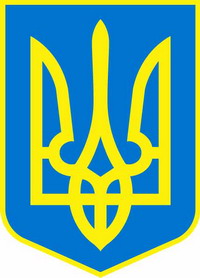
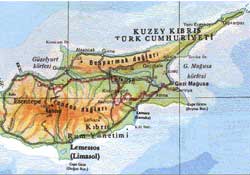
In a world history and even in geography has left the bright trace the representative of Russian dynasty of Kumirs whom have named in honor of the forefather of all earthmen Kubera. Kubara was tsar Volga Bulgarian. It is known also under names Chorus, Kurt, Kubrat and Kurbat. Tsar Kubara under the official version of a history of rules in 605-665. His father khan Alburi (593-603 of board), and the native brother - Shambat was. Kubara was the lineal descendant of Varyag Attila. Ancestors Kubara were: the grandfather khan Askal (590-593), khan Bojan (535-590) known and under name Sandlih, the son of khan Reana (Mundo, Tatra Banat, 505-520), the grandson of khan Masguta (489-505), the great-grandson of khan Irnika (463-489) who was son Attita (406-453). Officially Kubara was born in Byzantium, modern Istanbul and it was brought up at a court yard of emperor. First time married rich Greek woman Evdokiya in 635. Kubara had a title patrician the Roman Empire, given by emperor Irakly. In 660 or 665 Kubara has died. His burial place has found about village Malaya Pereshepina the Poltava area of Ukraine. A plenty of gold both silver products and a seal with name Kubara which are now stored in the Hermitage have been taken. It is interesting, how каган Volga Bulgarian so much time has lead in capital of the Byzantium Empire? It is obvious, that then empire corrected Hagan’s. Tribes Volga Bulgarian under management Kubara and Shambat have based the huge state on splinters of empire Attila, it named Duloba. In the central Europe Duloba covered territories of Poland, Czech, Slovakia, Austria, Serbia, Bosnia and Montenegro. Shambat successfully was at war with Francs and Byzantines. Presumably capital of the new state became the city of Kiev based Shambat on coast of Dnepr. Thus Shambat has broken a rule of one-man management and began to reign new city independently, for what have been nicknamed Kubara "Cut off", that was said as word "Kiy". This nickname began to designate capital of empire Shambat. So there was a name of the city of Kiev. At the end of life Shambat has reconciled with brother Kubara and has returned to the Volga Bulgaria. Then in destiny Shambat around of Dnepr and Kiev came to live White Ugry and have occupied the grounds Slavic. Kubara had five sons who called Batpay; Kotrag; Asparuh (Asparih), the Bayan and Bezmer. After death Kubara his empire was divided between sons and began Great Bulgarian moving peoples. Son Asparuh has got over on coast of Danube and has based Great Bulgaria, conducting successful wars with Byzantium on the Balkans. Resettlement another булгарской groups of khan Kotraga (Kodraka) together with a part Saver (Suvar) upwards across Volga on Sviyaga. In pool of Kama Bulgarian-Uturguru and Saver have headed local tribes of the Ural (Finno-Ugric) and Iranian origin. So the strong state Volga or Kama Bulgaria was formed. Bulgarian and Saver have together left Great Bulgaria, together went upstream Volga. Together came in the new country on Kama, but have lodged though also a number, but separately. So there were both largest cities Volga Bulgaria: Bulgarian (Great Bulgaria) and Suvar. So, process of rapprochement and merge of these close ethnic groups proceeded still any time. Still « the Great city of Bulgarian » Bilyar, as a heritage Bulgarian Huns waves, Beloyar (Beloyar → Bilyar) there was. Actually Siberia the turtle has received the name from Bulgarian which named these open spaces Suvar-Subar, like the Japanese word Subaru, meaning. The word Subara is very similar to name Kubara. It is obvious, that Siberia is named in honor of the ancient forefather of earthmen Kubera. Bulgarian khan Batpay (Batbay, the Bayan, Bezmera) have remained in Great Bulgaria (in the Curved seashore) and have created new Great Bulgaria an Empire (Hazard Hagan) with capital in the city of Itil. Under the certificate of sources, all Hazard the aristocracy surrounding Hagan and people in Itil, has consisted from patrimonial Bulgarian elite. The rest former Great Bulgaria (after Great Bulgaria moving and decline Hazard Hagan) began to be called Black Bulgarian. Or so began to refer to Bulgarian in a lower reaches of Dnepr. Up to now in the Curved seashore the relict Great Bulgaria - small people Balkarian was kept. In Black Sea Coast many groups Bulgarian the population were formed. Among them Torks (Black Klobuki), Kovuy, Berendey, Black Bulgarian. It is interesting, that else Herodotus described for a Scythian epoch people Melanhlens (Black Raincoats, or Black Cloaks). Separate groups of Bulgarian came in Hungary, and the some people have reached to Italy and France. On northern Caucasus and southern Russia there was a set of names of geographical places and peoples given in honor of ancient forefather Kubera and his lineal descendant of tsar Volga Bulgarian Kubara. These are names of the river the Kura, Kuban, Kabarda, Kabardino-Balkarian Republic, Kurds, also names of animals and plants - Kabarga, a vegetable Kabackok. Meting of Cossacks referred to Kuren. To uniform source names a Kabak and a Cabaret, the name of an Islamic holiday Kurban-Bayram, etc., etc. ascend. In particular, the ancient name of island Cyprus sounded as Kubara, therefore on island the religious sack of the bull has been advanced. In Turkish language the name of island Kibris, and sounds as Kubrus - Russian Cub. Volga Bulgarian perfectly knew that conduct the sort from the seven first tribes in honor of which the capital of an empire referred to Idel (seven). David's star, swastika and trident were considered as symbols of an ancient direct sort of tsars. Bulgarian people esteemed mountains: made on them the prayers to the Supreme God - Tangre (Tengre), and also created their imitations - pyramids (earthen - barrows, stone, brick, etc.) in which did special caves for burial of heroes and leaders. Simple people buried in catacombs - the caves which have been dug out in a lateral wall of a sepulchral hole. Above such tombs put stone or wooden monuments - symbols of mountain (sometimes instead of a wooden monument put a tree). The most sacred numbers Bulgarian steel 3 and 7, therefore pyramids for burial did heroes (mausoleums) three-tier, and pyramids in honor of spirits and the God - seven-story more often. Actually the word a hole concerns to the most ancient times, and there was it on open spaces of the Volga region. Therefore Varyags at resettlement on the north and the West named the fortresses of the Yam. The most important symbol of first people of the Volga region the trident was. In the beginning it was a symbol itself Tangra (Tengra) the God who frequently became the Sun. Bulgarian spoke: « The sun is eye Tengra ». So the trident originally meant not that other, as beams of a rising sun. It agrees Tengreanian to myths Bulgarian, the trident was the most terrible a lightning the shock weapon. At first - the first spirit (alpa, the expert) Birgun, then when Birgun has grown old and « has departed from important has put », only having occasionally an effect on every possible acts of nature and a bad weather - his sons, alpa light and heat of the Hag - Hardugan (Mardukan) and alpa lightning’s, waters and world ocean (« boz idan » - « a blue valley » on - Bulgarian) Kubara. Name Nardugan - « Given birth by Light » or « Giving rise Light » on - Bulgarian in Schumer’s sources has taken the form "Marduk", and name Kubara in the Greek myths began "Poseidon". It was formed from « boz idan ». The hag could become a rook, snake a dragon, and Kubara - the bull. On Tengrianian knowledge, the kind of the Hag and Kubara, and also some other powerful alps, could accept itself Tangra - the Creator of the Universe. Kimery-Agatary counted Kubara the most favorite spirit. Bayans explained, that a staff (staff) - "trident" means authority Tangry and it alps above three worlds - Heavenly, Terrestrial and Underground. Also allows them to make travel there for a meeting with alps and souls of ancestors. Simple Bulgarian named a trident "berenjar" (blockhead), "eshtek" (ishtyak) or "baysanak" (the big spear), "hazard" (the leader of herd), etc. In a trident saw the image of onions and arrows, horns hazard, a half moon, bunchuk and so forth. Shaman had own name of a trident "Cossack" (a goose leg), forbidden for a pronunciation to simple people under fear of a penalty heavenly. This name has arisen on ground of that alps Mardukan and Kubara became dragons with goose legs. By the way, Mardukan, created at will Tangra the Earth, for this reason has been transformed by national storytellers into the goose (duck). The grand-ducal dynasty of Russia has been based Ruric and also counted a trident (baltavar) the arms. As against the Volga Bulgaria, Bulgarian governors of Russia kept a trident as the arms and the state till XII century. For example, grand duke Vladimir Red Sun minted a trident on the coins, and after acceptance of Christianity by Russia as the state religion in 988. Only in the beginning of XII century grand duke Vladimir Monomah who has crushed Bulgarian culture of the Kiev Russia from desire to reorient Russia on communication with the Christian West, has tried to deprive a trident of a rank of the arms of the Kiev Russia. We were reached with sources of that time, in which Kiev governors IX-XI of centuries directly named Bulgarian a title "Hagan" (tsar, emperor): Hagan Vladimir, Hagan Jaroslav (Wise), etc. And steppe (southern) Ukraine entirely populated Bulgarian with tribes Berenjar-Berendey, Badjanak-Pecheneg (some medieval authors made their name from the name of a trident - « bay sanak », Karakalpak - black Klobuk, Hazard, Kharka (from their name there is a name of Kharkov), Seber-Sever-Sevruk, Uzov-Torkв and others - has kept a trident as the symbol. Not casually Chernigov prince Vladimir Svjatoslavovich, as the author of a poem « the Word about shelf Igor » (1180th years), has informed up to us two ancient names: a trident - "Trojan" and Southern Russia (Steppe Ukraine) - « Earth Trojan ». In the poem Vladimir Svjatoslavovich condemns Vladimir Monomah whom Bulgarian named "Tazbash" - "Artful" for conflicts with Bulgarian tribes. When in 1362 Lithuania has grasped Kiev and its possession closely came to border of a wood and steppe, the Ukrainian Cossacks – Cherkessk have immediately declared the independence of the Mongolian Horde. The center of the independent Ukrainian Cossacks restoring in person Kiev-Russian the state (Russia), began island Hortitsa. This name has taken place from Bulgarian names of island "Kurtash" (Island Hagan Kurta-Kubrat) or Hordize (« Rate Kubrat »), in general Kubara sometimes named Hort. From now on the Bulgarian-Cossack trident again comes back as the state symbol. Tsars of the Volga Bulgaria till XVI century continued to count a trident the patrimonial arms and represented it on Bulgarian coins. After route by the Moscow - Tatar army Bulgarian capitals of Kazan in 1552 Bulgarian people, in memory of the lost statehood, has made the national arms tamga of Kazan - Y. Now people of Ukraine has taken as the state symbol a trident, having represented it on the arms, a flag and other attributes of the government. The trident is patrimonial is familiar to a dynasty Russian Varyags and Kumirs. In particular, the city of Kiev has based Princes Kubara and Shambat. The Earth modern Ukraine always was the property of sort Russian Varyags, since Attila, Kubara, Puric and Russian Princes, therefore historically and actually Ukraine is territory of Russia. 13.02.2008.
| 
|
|
|